Orbital Matter 3D Prints Rigid Beam in Space Vacuum
Orbital Matter successfully 3D printed a half-meter rigid beam in the vacuum of space using its Replicator-2 satellite.
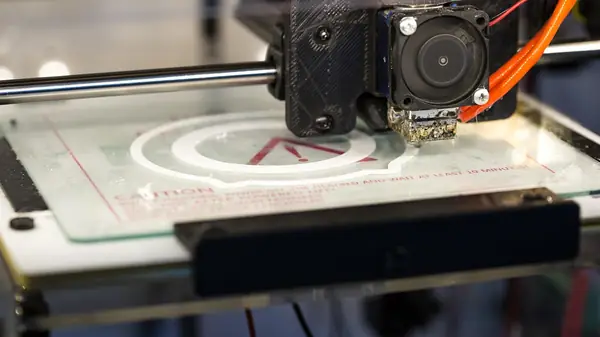
Orbital Matter’s Replicator-2 satellite successfully 3D printed a half-meter long rigid beam out of custom plastic material in the vacuum of space. The satellite was launched on a SpaceX rideshare mission this summer with four 3D printers onboard. Each printer creates a rigid, cylindrical beam by extruding resin coils cured by ultraviolet light. An anomaly caused one printer to fail, but the boom created by another printer successfully deployed a solar array. Jakub Stojek, CEO and co-founder of Orbital Matter, stated that Replicator 2 is the first proof that arrays can be built in space at mission-demanded sizes.
The company is partnering with the European Space Agency and Thales Alenia on the mission. Previous 3D-printing efforts in microgravity were limited to the pressurized environment onboard the International Space Station. Orbital Matter’s CTO Robert Ihnatisin stated the company preferred to learn and adapt software in orbit rather than waste years testing on the ground. Engineers believe that 100 meter booms are feasible, noting that SpaceX’s Starlink V2 satellites use solar arrays that are 20 meters long.
Orbital Matter is working on a demonstration mission scheduled for launch in 2028 to test a larger printer version. The upcoming mission aims to deploy a solar array capable of generating 5 kw of power. The company hopes to achieve larger deployments of 100+ KW per wing by 2030.
Sources
Every sentence of this story was checked against facts quoted from these articles. How we make the news
Spotted an error? Tell us